 Podcast and video: Understanding Prostate Biopsy
 1 Minute Read
This module will teach you about prostate cancer– what it is and how to deal with its impact on your life.

Receiving a prostate cancer diagnosis can feel overwhelming. It is normal to have many questions and emotions at once. The Weiser Center for Prostate Cancer was built for exactly this moment. We are here for you and your family, and we are committed to helping you find answers and move forward with confidence.
From your very first visit, you are an equal partner in your care. We listen, we learn from your experience, and every decision is made together.
The prostate is a small gland located in the male pelvis, just below the bladder. Its job is to make seminal fluid, which helps carry and nourish sperm. The most common form of prostate cancer is called prostate adenocarcinoma (pronounced: add-en-oh-car-SIN-oh-mah). This is a cancer that starts in the cells of the prostate gland.

Prostate cancer is the most common cancer in American men. About 1 in 8 men will be diagnosed during their lifetime, and most diagnoses occur between the ages of 55 and 75. The encouraging news: when prostate cancer is detected early, most men survive it. In 2026, an estimated 333,830 new cases will be diagnosed in the United States, with approximately 36,320 deaths from the disease. (Source: American Cancer Society Facts & Figures 2026)
The path to diagnosis typically begins with screening — a PSA (Prostate-Specific Antigen) blood test and/or a digital rectal exam (DRE). If something warrants a closer look, additional testing such as an MRI (Magnetic Resonance Imaging) may follow. Ultimately, a prostate biopsy is performed to confirm whether cancer is present. A biopsy is a procedure where small tissue samples are taken from the prostate and examined in a lab.
Once a diagnosis is confirmed, you’ll typically meet with both a urologic oncologist – a surgeon who specializes in cancer – and a radiation oncologist – a doctor who specializes in radiation treatment – to discuss your options. These appointments are a chance to learn about your options and ask questions. Your partner and caregivers are welcome and encouraged to join you.
When you come in for your first appointment, you will meet the members of our team who will guide you through the steps ahead. We prepare thoroughly for every visit. Our goal is to ease your fears, answer your questions, and make sure you and your family feel informed and supported from day one. Advance to Step 2: Your First Visit
Podcast and video: Understanding Prostate Biopsy
1 Minute Read Prostate Biopsy
2 Minute Read
Prostate Biopsy
2 Minute Read Fusion Biopsy
2 Minute Read
Fusion Biopsy
2 Minute Read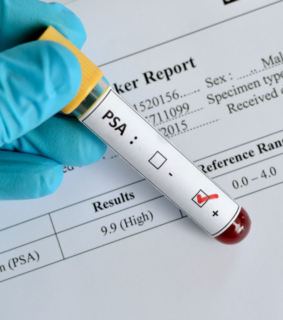 PSA (Prostate-Specific Antigen)
2 Minute Read
PSA (Prostate-Specific Antigen)
2 Minute Read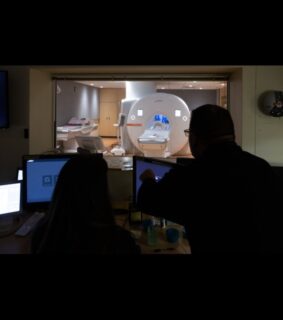 Prostate MRI
2 Minute Read
Prostate MRI
2 Minute Read Understanding Prostate Cancer: Gleason Score, Grade Groups, and Risk Stratification
3 Minute Read
Understanding Prostate Cancer: Gleason Score, Grade Groups, and Risk Stratification
3 Minute Read